
Precast Cement Manhole Covers & Frames
Overview
Material Combinations/ Technical Details
Precast Cement Manhole Covers and Frames are designed for heavy-duty and high-load applications. Manufactured using high-grade concrete and precision moulds, these products ensure consistent strength, dimensional accuracy and long-term durability. They are suitable for areas where vehicular and public traffic is high, providing safe access to underground drainage, sewer and utility networks.
Used in Projects
- Smart cities.
- IT parks.
- Highways.
- Residential Colonies.
- Hospitals.
- Commercial Complexes
Applications
- Municipal roads
-
Highways
-
Industrial zones
-
Government infrastructure
-
Urban Development Projects
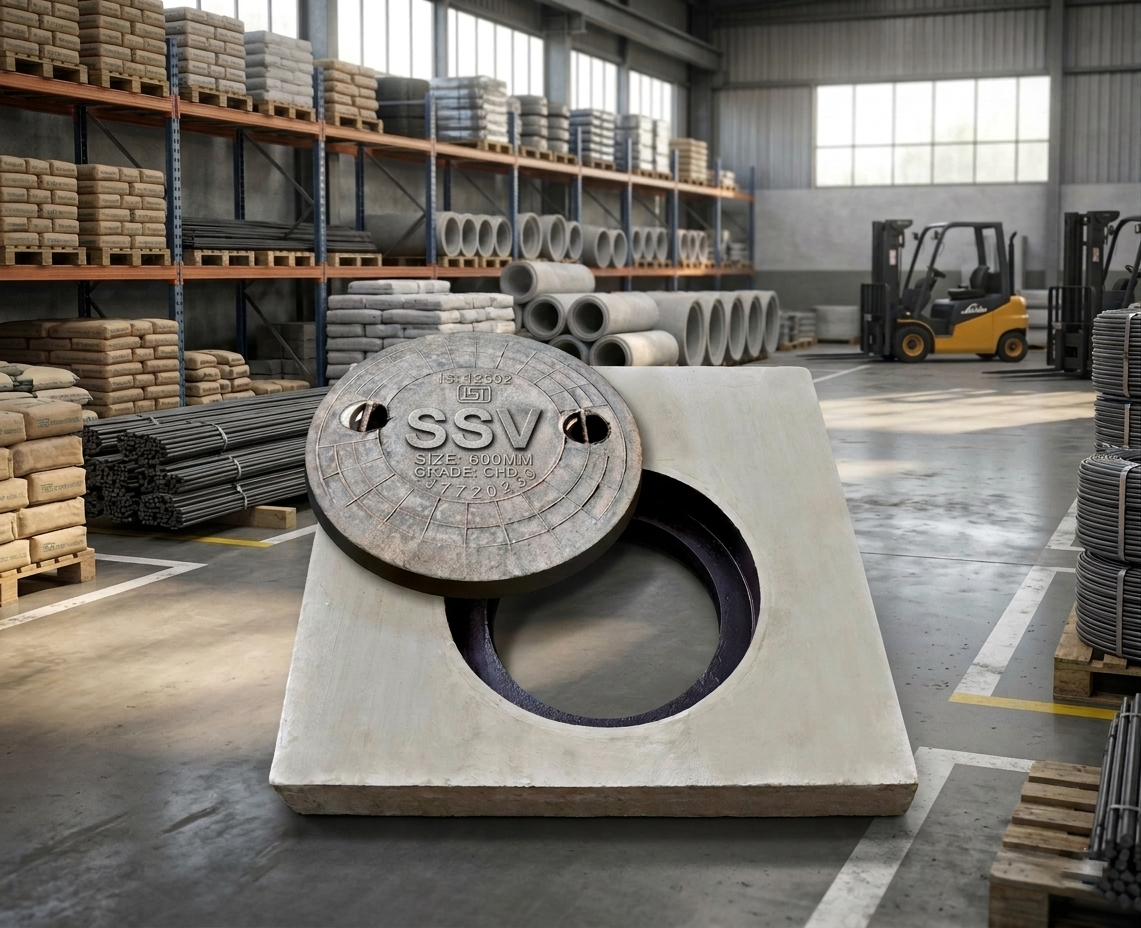
Product Catalog
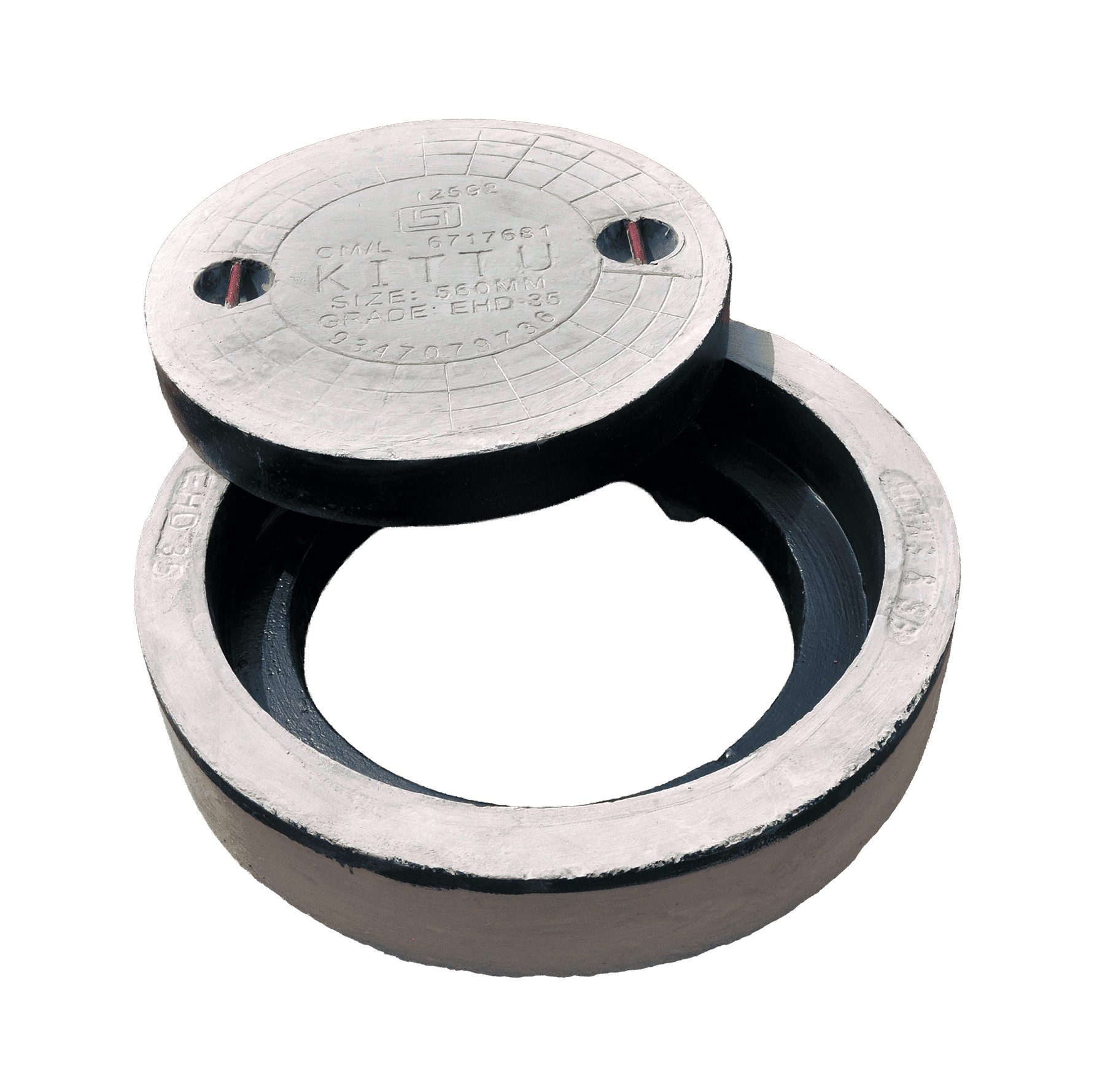
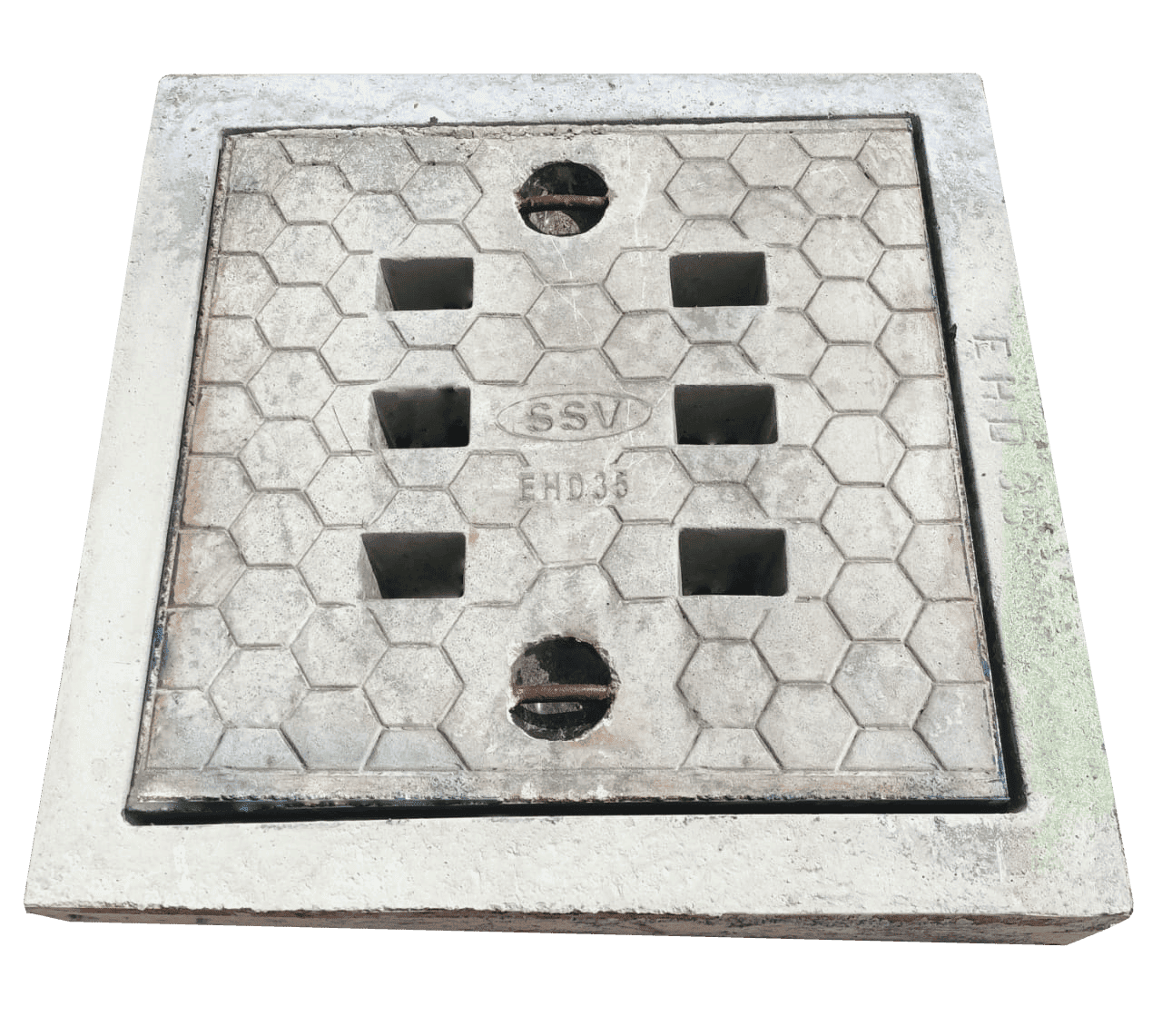
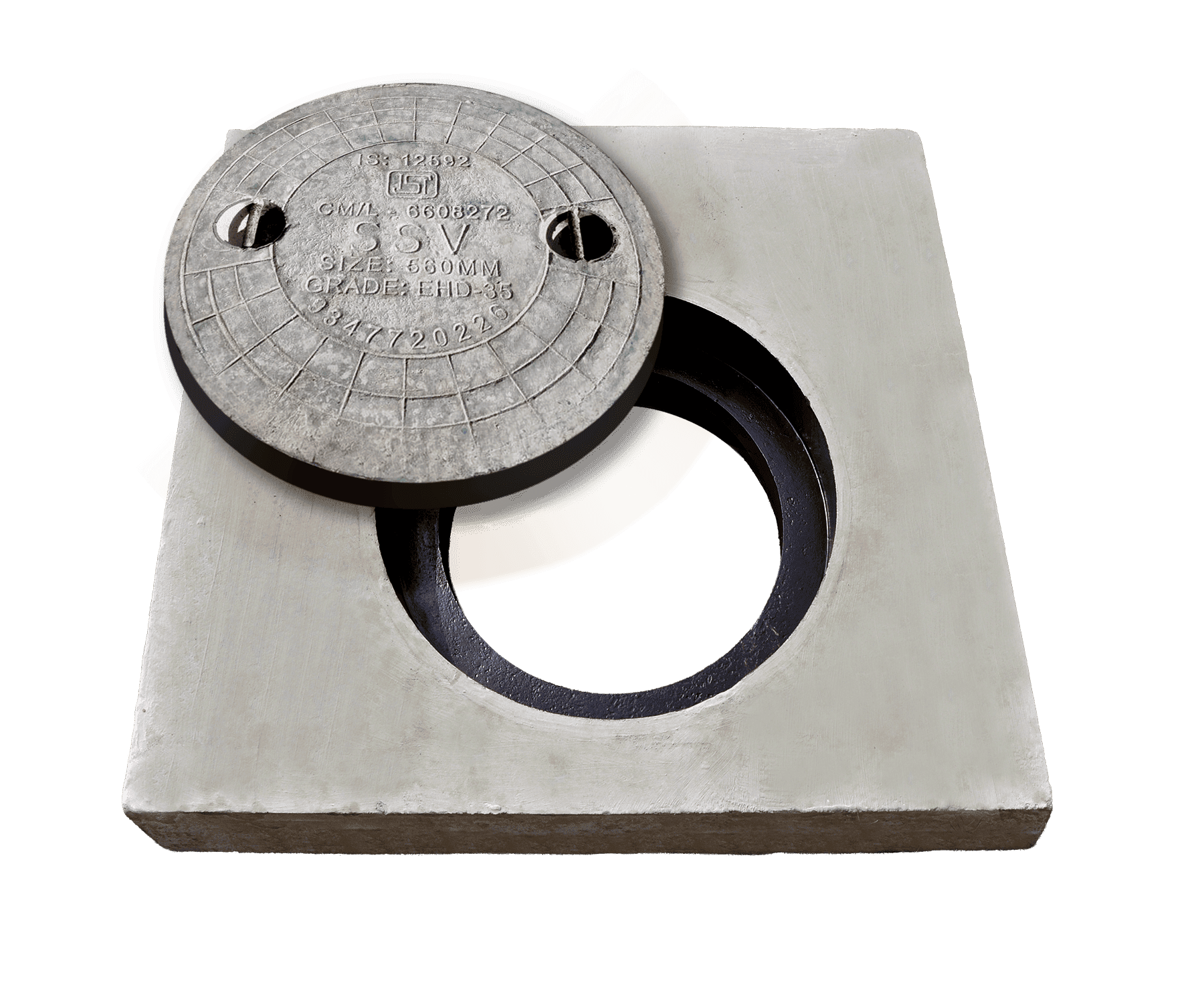
Technical Specifications
1. General Technical Specifications
Material Composition
| Feature | Standard / Description |
|---|---|
| Concrete Grade | Minimum M30 for standard use; M40+ for heavy duty. |
| Reinforcement | High-strength deformed steel bars (TMT) or Steel Fiber Reinforced Concrete (SFRC) for enhanced crack resistance. |
| Cement | 53-Grade OPC or PPC conforming to standard codes. |
| Aggregates | Well-graded coarse and fine aggregates (max size 20mm). |
Manufacturing Process
| Feature | Standard / Description |
|---|---|
| Compaction | High-frequency vibro-compaction for high density and zero voids. |
| Curing | Minimum 14-28 days water curing or steam curing for rapid strength. |
| Edge Protection | Mild steel (MS) flat edging (25x3mm or 2mm sheet) to prevent chipping. |
| Finish | Chequered or anti-skid top surface with protective anti-corrosive paint on the underside. |
2. Dimensional Specifications
| Grade | Category | Load Capacity | Typical Clear Opening (mm) | Recommended Location |
|---|---|---|---|---|
| LD 2.5 | Light Duty | 2.5 MT (25 kN) | 450 x 450 / 600 Dia | Residential complexes, footpaths |
| MD 10 | Medium Duty | 10 MT (100 kN) | 560 Dia / 600 x 450 | Service lanes, car parking areas |
| HD 20 | Heavy Duty | 20 MT (200 kN) | 560 Dia / 600 x 600 | Commercial areas, city trunk roads |
| EHD 35 | Extra Heavy | 35 MT (350 kN) | 600 Dia / 900 x 600 | Industrial zones, ports, warehouses |
3. Installation & Jointing
Step 01
Base Preparation
Prepare a level bed using 1:3 cement mortar or a lean concrete base. Ensure the opening matches the frame's clear opening.
Step 02
Frame Placement
Set the frame on the mortar bed, ensuring it is perfectly flush with the road/floor level using a spirit level. Secure with additional concrete haunching.
Step 03
Joint Sealing
Use bituminous sealants or rubber gaskets for watertight joints in sewerage applications. Fill gaps with non-shrink grout.
Pro Tip:
Wait at least 72 hours for the bedding mortar to cure before allowing vehicular traffic over the new installation.
4. Chemical & Environmental Resistance
| Chemical / Environment | Description |
|---|---|
| Chemical Resistance | Naturally resistant to sulfates and moderate acids (pH 3+). Can be enhanced with crystalline admixtures or epoxy coatings for aggressive sewer gases (H2S). |
| UV & Thermal Stability | Unlike plastic/FRP, concrete does not degrade under UV exposure and maintains structural integrity in extreme temperatures (fire-resistant). |
| Water Impermeability | High-density vibro-pressed concrete ensures low porosity, preventing water ingress and protecting internal reinforcement from rust. |